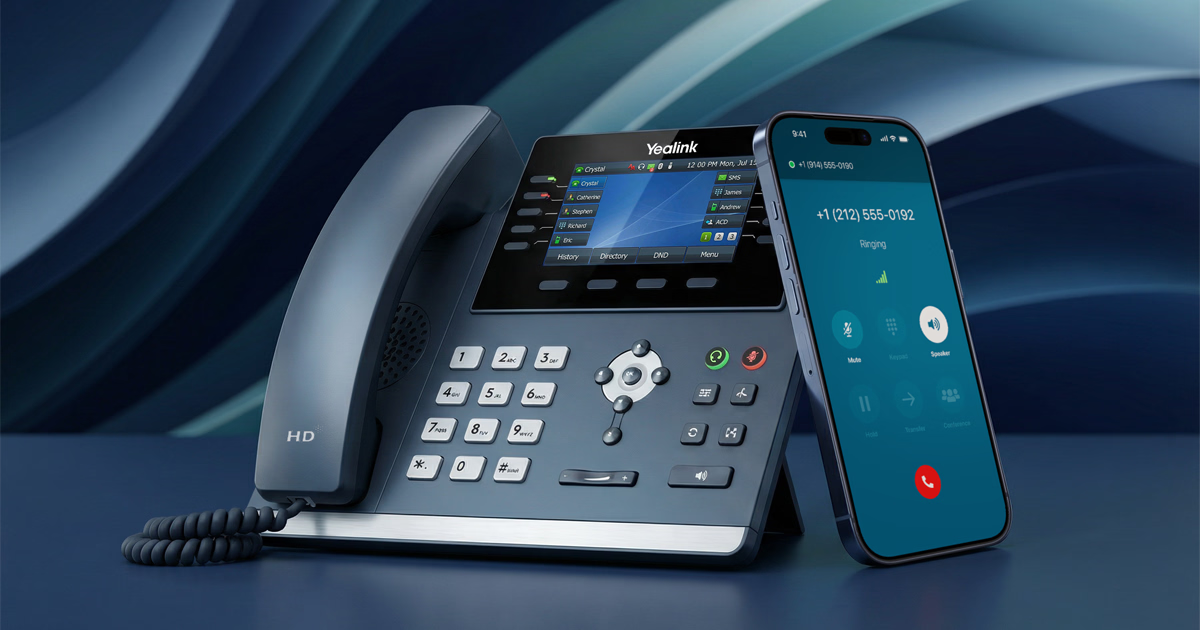
Why Simple Business Telecom Systems Win in 2026
Despite all the buzz around AI-powered everything, a growing segment of US small and medium-sized businesses are asking for something remarkably straightforward: a simple business telecom system that just works. While headlines tout conversational AI agents and unified communications platforms with dozens of features, many SMB owners simply want their team to make and receive calls reliably.
This isn’t about rejecting innovation. Rather, it’s a thoughtful recognition that stable dial tone and clear voice connections remain the foundation of business communication. According to recent industry data, approximately 70% of businesses have adopted VoIP technology, yet surveys consistently show that core calling features matter most to daily operations.
The telecommunications industry finds itself at an interesting crossroads. On one side, providers race to add AI capabilities, advanced analytics, and omnichannel integration. On the other, business owners navigate this feature explosion wondering which tools actually move the needle for their operations.
The Good vs The New: A Balancing Act
Here’s the conundrum: everyone wants you to believe that AI voice agents, sentiment analysis, and predictive routing are essential. Meanwhile, most small businesses just need their phone to ring when customers call and their team to answer professionally. There’s nothing wrong with either approach; the challenge is matching the right solution to your actual business needs.
Research from the Federal Communications Commission emphasizes that reliable telecommunications infrastructure serves as the backbone for business operations. When businesses evaluate phone systems, they’re essentially weighing stability against sophistication. Both have merit, but the “good” often matters more than the “new” for day-to-day success.
Consider that while the global VoIP market is projected to reach $264.27 billion by 2029, the primary driver isn’t flashy features. Instead, businesses cite cost savings of up to 75% and reliable connectivity as their main motivations. The simple business telecom system delivers these core benefits without overwhelming users with unnecessary complexity.
What Makes a Simple Business Telecom System Actually Simple
Simplicity doesn’t mean lacking capability. The best simple business telecom systems include essential features that support professional communication without requiring a technology degree to operate. Here’s what matters:
- Crystal-clear voice quality: When your customer calls, they should hear you perfectly. Cloud-based VoIP systems now deliver HD voice quality that matches or exceeds traditional phone lines, assuming you have reliable internet connectivity.
- Easy call management: Features like call forwarding, voicemail-to-email, and auto-attendants should work intuitively. Your team shouldn’t need training sessions to route calls or check messages.
- Mobile flexibility: Your phone system should work wherever your team works. Desktop apps, mobile apps, and even web browsers should all provide consistent calling experiences.
- Straightforward setup: Industry data shows that most modern cloud phone systems can be operational within an hour. Compare this to traditional PBX systems requiring specialized technicians and physical equipment installation.
The Human Element Still Matters Most
Here’s something worth remembering: despite all the technological advancement, customers still prefer speaking with actual people for important business matters. Here’s something worth remembering: despite all the technological advancement, customers still prefer speaking with actual people for important business matters. Industry research consistently shows that customers expect reliable interactions with businesses, but “consistent” doesn’t necessarily mean “automated.”
Real human communication builds relationships, resolves complex issues, and creates customer loyalty in ways that AI assistants can’t fully replicate. Your simple business telecom system should excel at connecting humans, first and foremost. Everything else is enhancement, not replacement.
When Simple Meets Smart: The Best of Both Worlds
Now, here’s where things get interesting. A simple business telecom system doesn’t have to reject innovation entirely. The most forward-thinking providers are adding intelligent features that enhance rather than complicate the user experience.
Think of AI as a helpful assistant, not a replacement operator. Features like automatic call transcription, smart voicemail transcription, and suggested message replies can save time without changing how your team fundamentally communicates. These tools work quietly in the background, supporting your team rather than requiring constant attention.
The telecommunications industry is evolving toward what we might call “invisible innovation.” The best features are those you barely notice because they simply make your workday smoother. When voicemail automatically converts to searchable text in your email, that’s innovation serving simplicity.
Real-World Scenarios for Simple Systems
Let’s talk about who benefits most from a simple business telecom system approach. Local service businesses like plumbers, electricians, landscapers, all need phones that ring reliably and route to available technicians. They don’t need video conferencing for 100 participants.
Professional services firms, accountants, lawyers, consultants, all require clear communication with clients and among team members. They benefit from features like call recording and voicemail transcription, but they don’t necessarily need AI-powered sentiment analysis.
Retail businesses need consistent point-of-sale communication and the ability to contact suppliers or customers quickly. A straightforward interface that anyone on staff can use matters more than advanced analytics dashboards.
These businesses represent millions of US employers. According to Small Business Administration data, small businesses account for nearly half of private sector employment. Their communication needs are legitimate and substantial, even if they’re not asking for every cutting-edge feature.
Looking Ahead: Evolution Without Revolution
The future of business telecommunications isn’t about choosing between simple reliability and innovative features. Forward-thinking providers recognize that businesses want both, just thoughtfully integrated. The next generation of communication tools will likely be simple to use while being sophisticated under the hood.
AI voice agents, for instance, are becoming genuinely useful for handling routine inquiries after hours or during peak call times. However, they work best when seamlessly integrated with your existing phone system, not as a separate complicated platform requiring its own management.
Smart call routing can ensure customers reach the right department without navigating complex phone trees. Automatic meeting summaries can help teams stay aligned without requiring everyone to join every call. These innovations serve simplicity rather than fighting against it.
The 2talk Approach: Good Foundation, Smart Enhancement
At 2talk, we’ve built our reputation by delivering rock-solid voice service to US businesses. Our hosted phone system provides the reliability and clarity that businesses depend on daily. We understand that when your phone rings, it needs to just work, every single time.
That said, we’re not standing still. We’re excited about launching AI voice agents that will help our customers handle routine calls more efficiently. However, we’re approaching this thoughtfully. Our AI features will enhance your communication capabilities without complicating your daily operations. You’ll get the innovation you need when you need it, without sacrificing the simplicity you value.
Whether you’re a startup needing basic but professional communication tools or an established business wanting reliable service without unnecessary complexity, 2talk delivers. Our business VoIP solutions scale with your needs, adding capabilities as your business grows without forcing features you don’t require.
Making the Right Choice for Your Business
Choosing a simple business telecom system in 2026 isn’t about rejecting progress. It’s about recognizing what actually drives your business forward. Clear communication, reliable service, and intuitive tools typically matter more than feature lists that read like technology manifestos.
Start by evaluating your actual communication needs.
- How many calls does your team handle daily?
- What features do you use consistently versus those sitting dormant?
- Who needs to use the phone system, and what’s their comfort level with technology?
These practical questions should guide your decision more than marketing hype about the latest AI breakthroughs.
Remember that approximately 45% of SMEs use VoIP specifically because it’s affordable and straightforward and the copper network is being shutdown. The global business phone systems market continues growing toward $40 billion precisely because providers are delivering practical solutions that businesses can implement quickly and use effectively.
Ready for Reliable Communication That Just Works?
The telecommunications landscape will continue evolving, but one truth remains constant: businesses need dependable ways for humans to communicate with each other and with customers. Whether you’re intrigued by emerging AI capabilities or simply want a phone system that won’t let you down, the right provider should offer both options.
At 2talk, we specialize in delivering simple business telecom systems that US businesses rely on every day, and have been since 2008. Our team understands that your communication infrastructure should support your business, not complicate it. We’re here to provide honest guidance about what you actually need, not to overwhelm you with features you’ll never use.
Ready to explore how straightforward business telecommunications can be? Contact our team today for a personalized consultation. We’ll discuss your specific communication needs and design a solution that balances reliability, simplicity, and the right level of innovation for your business. Let’s build a communication foundation that supports your success in 2026 and beyond.