Mobile App
Experience ultimate mobility
Learn more

Mobile App
Experience ultimate mobility
Cloud Communications and VoIP Calling

Most toll-free numbers work the same way: pick one, activate it, pay a small ongoing service fee. Premium true-800 numbers are the exception, and if you’ve come across “licensing” pricing instead of a flat purchase price, here’s what that actually means.
Standard toll-free numbers, new 888s, 877s, and similar, are effectively unlimited in supply, so providers can offer them for a low flat fee with minimal friction. True 800 numbers are a fixed, non-renewable pool, the range was exhausted years ago and there will never be more of them. To make that scarce inventory accessible without an enormous upfront price tag, providers license the number for ongoing use instead of selling it outright.
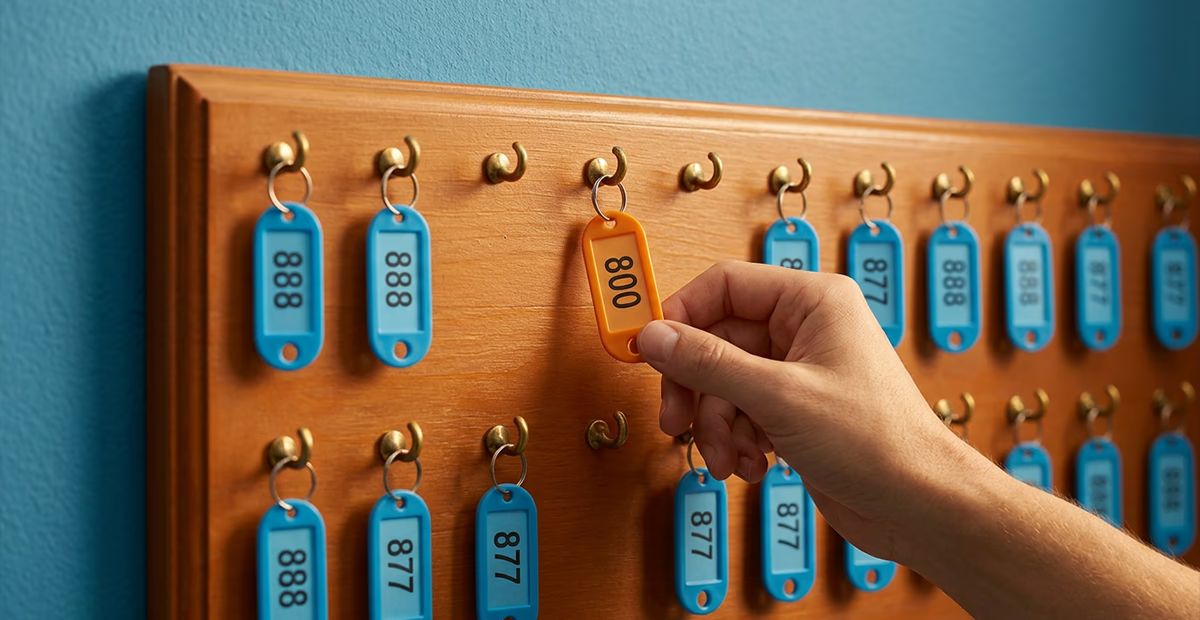
That last point is the one people are most often surprised by, so it’s worth being direct about it: a licensed number is yours to use for as long as you keep the license active, but the underlying registration stays with the provider. If you ever move carriers, you’d typically need to release the number and license a different one through the new provider, rather than bringing the same number with you.
| Licensing (true 800) | Buying (standard toll-free) | |
|---|---|---|
| Upfront cost | Lower relative to scarcity value | Low flat fee |
| Ongoing cost | Monthly license fee | Standard service fee |
| Portability | Typically cannot port away | Portable |
| Contract | Month-to-month, cancel anytime | Standard terms |
| Availability | Extremely limited (fixed pool) | Effectively unlimited |
Neither structure is “better” in the abstract, they exist because the underlying inventory is fundamentally different. Licensing is what makes access to a genuinely scarce, non-renewable resource possible without asking a small business to pay what that scarcity would otherwise cost outright.
It depends on how much weight the prefix itself carries for your business. If a true 800 number materially strengthens how customers perceive your business, in advertising, in an established industry, in a franchise rollout, the monthly license is a predictable, cancel-anytime cost for a credibility asset you couldn’t otherwise obtain, since no new 800 numbers are being created.
If the prefix itself isn’t doing meaningful work for your brand, a standard purchased toll-free number will do everything you need at a lower, simpler cost.
See current 800 numbers available for license, including pricing by number pattern.
